Start from the room, not the catalogue
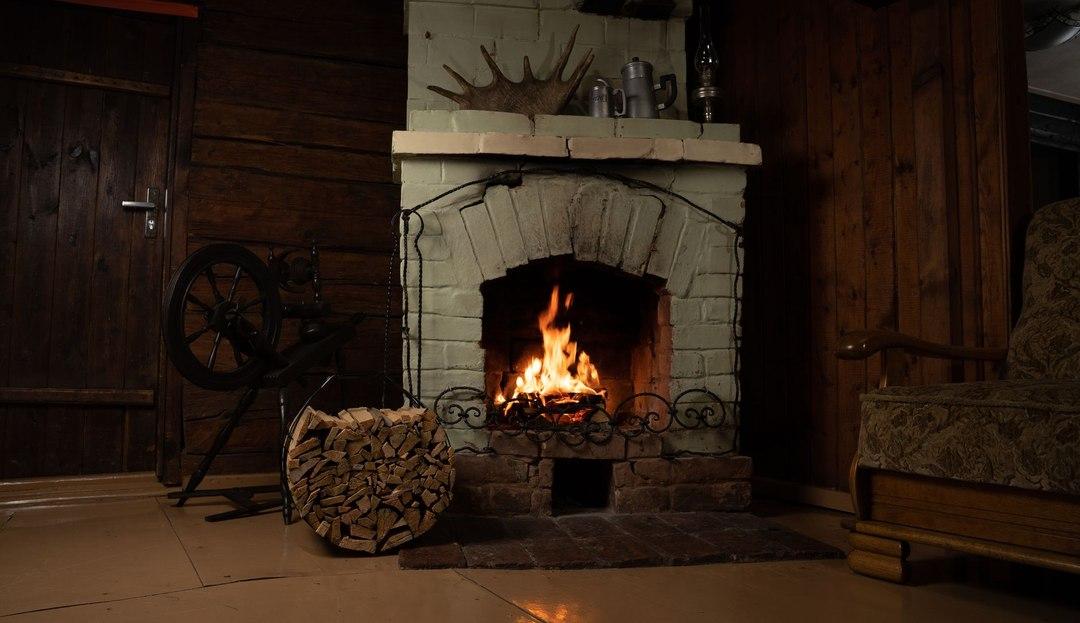
Owners around San Juan Capistrano usually call about a remodel with a picture in mind: a plaster face instead of red brick, a deeper hearth, a mantel that suits a Spanish style living room. The picture matters, but the budget is set by a plainer question. Are you changing how the fireplace looks, how it burns, or where it sits? Each answer lands in a different price tier, and we sort every remodel estimate that way.
Tier one: a new face on the same fireplace
The firebox, flue and chimney stay. What changes is everything you see from the room: the surround, the hearth, the mantel, sometimes the whole wall around the opening.
What goes into the price:
- The material. Porcelain tile is quick to set. Natural stone is heavier, needs cutting on site and sometimes needs extra backing. Smooth plaster takes several coats and drying time between them.
- What comes off first. Removing a thin tile face is easy. Breaking off a full brick veneer is dusty, slow work, and we seal the room before it starts.
- The hearth. Raising, lowering or extending it changes the framing and the floor under it.
- Distance to wood. A new mantel has to sit far enough above the opening for the fuel you burn. Sometimes the mantel you love needs to go higher than you planned, and we say so on the estimate.
A face-only remodel has no published price, because two walls rarely share the same size, material and demolition. We measure, then price it in writing with a line for each part.
One condition comes first: the firebox behind the new face must be sound. We look at it before we price anything, because covering a cracked firebox with new stone is money spent twice.
Tier two: changing the fuel
Here the fireplace stays where it is, but what burns in it changes. The most common version in our area is a sealed gas unit slipped into the existing masonry opening, vented through a liner up the old chimney. It gives real heat, closes off the drafty opening and lights with a switch or remote.
Installed, that conversion costs $2,800 to $5,600. The range depends on the unit's size and features, the liner length and how much the opening needs to be adjusted to accept it.
Gas log sets cost less but heat far less. They suit a room where the flame is mostly for looks. A wood-burning insert is another route for owners who want to keep burning wood with better efficiency. Neither has a published price, since the set or unit you choose drives the cost, and we price them after measuring.
Fuel also has a local angle. Orange County sits under the South Coast AQMD, and its Rule 445 no-burn days are aimed at wood. Owners who want a fire on any winter evening often lean toward gas for that reason alone.
Tier three: a fireplace where none stood
Some remodels add a fireplace to a room that never had one: a family room addition, a primary bedroom, a covered patio wall. A sealed gas unit that vents straight outside through a wall or the roof makes that possible without a masonry chimney.
Installed in a fresh spot like that, a unit costs $4,450 to $8,950. Framing, the gas line run, the vent path and the finished face all sit inside that range, and the estimate breaks them out.
What sets the price at a glance
- Tier one: materials, demolition, hearth changes, mantel height. Priced after measuring.
- Tier two: sealed gas conversion of your current opening, $2,800 to $5,600; log sets and wood inserts priced after measuring.
- Tier three: a new outside-vented gas unit where the house never had a fire, $4,450 to $8,950.
- Before any tier: a Level 1 inspection at $165, or a Level 2 with camera at $390 if the chimney's history is unknown.
If your plans sit in one of these tiers, request a remodel estimate and tell us which room, what burns there now and what you would like it to become. We arrange a visit to measure.
Splitting a remodel across two budgets
Plenty of owners do a remodel in parts, and the estimate is laid out to allow it:
- Now: the gas conversion, so the room has usable heat this winter.
- Later: the new surround and mantel, once you have chosen the stone.
The order matters in one direction only. If a gas conversion is planned, it should go in before any new face, because fitting it later can mean cutting into finished stone. If you only want a new face and plan to keep burning wood, there is nothing to wait for.
Check the chimney before the facelift
A remodel over a damaged chimney is a poor trade. Before we price a new face or a conversion, we want to know the flue and the crown are in order. On an older house that has not had a camera inspection in years, a Level 2 tells you whether the chimney will carry the new setup. Our fireplace remodel and fireplace inserts pages show the work, and Chimney Repairs That Can Wait helps if the inspection turns up a list.
When the picture in your head is ready to become a price, our contact page starts the measuring visit.
Ready for Numbers on Your Own Chimney?
An article can only give ranges. Osgood Chimney Company writes the estimate for your house: each repair on its own line, a lean and a full option where both exist, and a mark on whatever can wait. Visits leave from San Juan Capistrano for Dana Point, San Clemente, Costa Mesa and beyond.